Kauai’s best experiences aren’t just its beaches and hiking trails. The island is full of sights that stop you in your tracks: a blowhole launching water 50 feet into the air, a valley so deep and green it barely looks real, a lighthouse perched on a cliff above the Pacific, and a beach where dozens of sea turtles haul out every evening to sleep. Here are our top sights we recommend to everyone who asks.
We’ve organized them by shore so you can plan your days efficiently. For context on how the island is laid out and how long the drives between shores take, see our island orientation guide.
Quick Links
North Shore Sights
Hanalei Pier
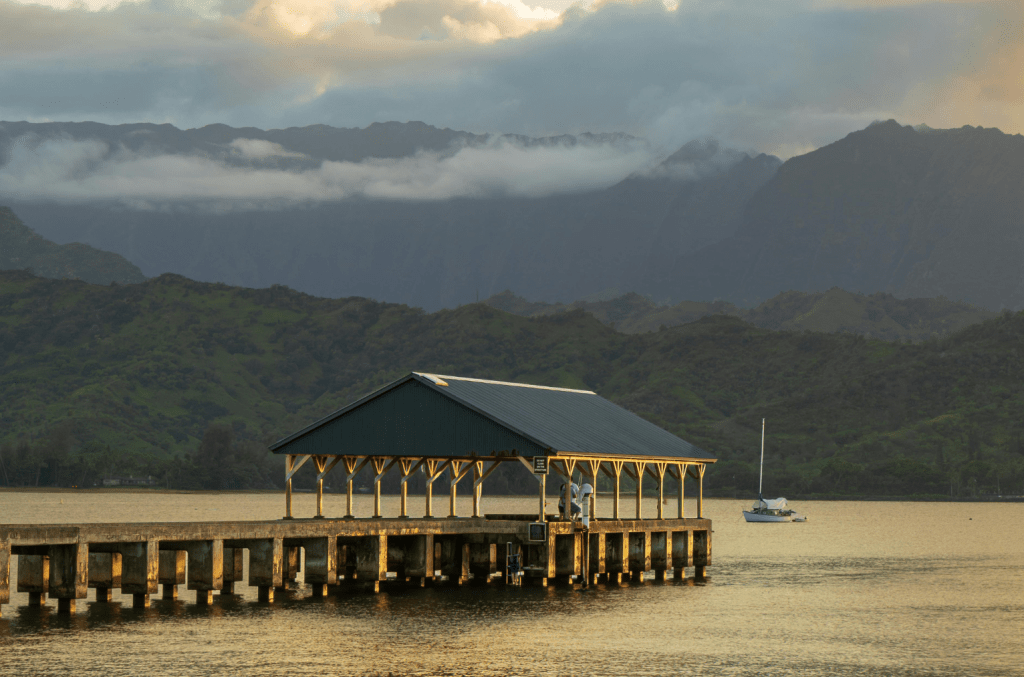
Hanalei Bay is our favorite beach on Kauai, and the pier at its eastern end is one of the most iconic spots on the island. Built in 1892 to ship taro grown in the Hanalei Valley, the pier stretches out over the bay with the full sweep of the two-mile beach visible to the west and the fluted green mountains rising dramatically behind it. It’s one of the best photography spots on the island — particularly in the early morning when the bay is glass-calm and the mountains catch the first light, and again at sunset when the whole scene turns gold.
The pier is also a social gathering spot for locals and visitors alike. Kids jump from the end into the calm summer water — not a bad way to spend an afternoon. Walk to the end and look back at the mountains for the classic Hanalei Bay perspective that appears on half the postcards of Kauai.
Getting there: Black Pot Beach Park at the eastern end of Hanalei Bay has the closest parking to the pier. Parking is free. From the lot, the pier is a short walk along the beach. See our best beaches guide for more on Hanalei Bay’s three beaches.
Queen’s Bath (Summer Only)
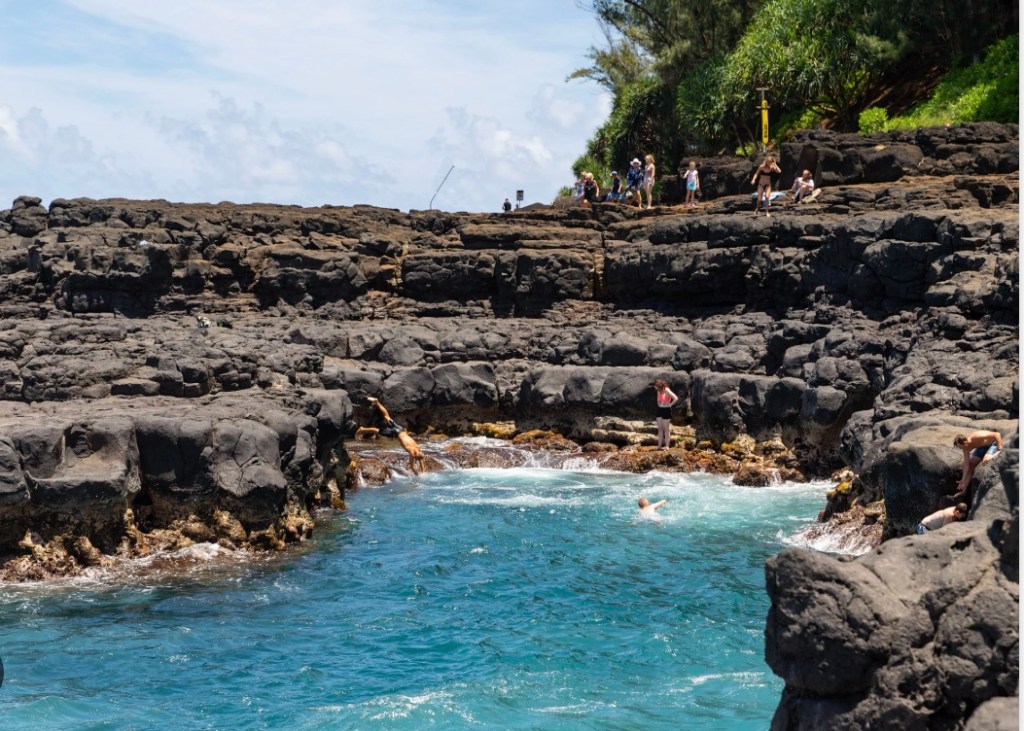
Queen’s Bath is a natural tidal pool carved into the lava rock shelf on the North Shore — a circular pool filled with ocean water, home to tropical fish and sea life, with dramatic ocean views from the rocky ledge surrounding it. On a calm summer day with clear water and small surf, it’s one of the most magical spots on the island.
We have to lead with the safety warning because it’s critical: Queen’s Bath is genuinely dangerous and has claimed lives. Rogue waves and sudden swells have swept swimmers off the rocks without warning — this happens regularly and the conditions can change in seconds. Never visit when surf advisories are in effect, never turn your back on the ocean, and never enter the pool if conditions look questionable. The pool is officially closed from approximately November through May due to winter surf. Summer-only, and only when conditions are calm.
With that understood: on the right day, Queen’s Bath is extraordinary. The pool is surprisingly deep, the fish life is remarkable, and the lava rock shelf surrounding it offers stunning views of the Na Pali cliffs to the west.
Getting there: Access via Kapiolani Loop in Princeville. Parking is extremely limited — we strongly recommend walking or biking to the trailhead rather than driving. From the trailhead, the path descends steeply through the trees to the lava shelf — wear good shoes with real traction (this is not a flip flop trail) and expect a scramble down the cliffside. The walk from the trailhead to the pool takes about 15–20 minutes.
Cost: Free. Hours: Daylight hours, summer only.
Walina Terrace at 1 Hanalei
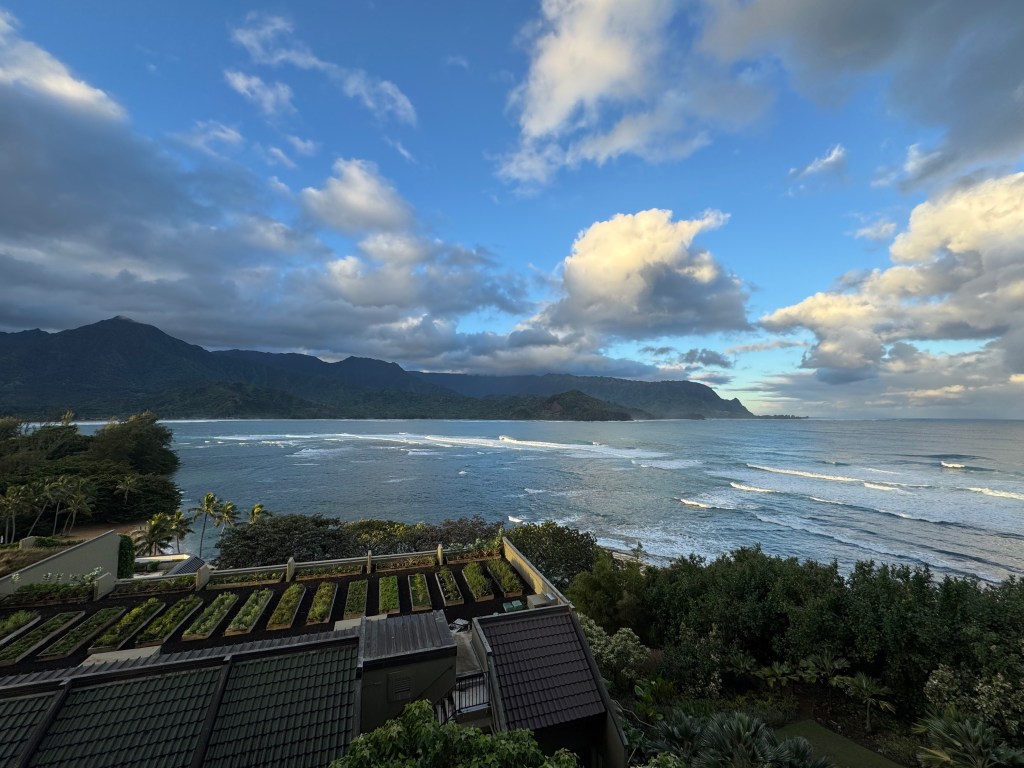
The Walina Terrace at 1 Hanalei (formerly the Princeville Hotel) is our favorite sunset spot on the island and one of the most beautiful views in all of Hawaii — an open-air terrace perched on the Na Pali cliffs overlooking Hanalei Bay, with Makana (the peak known as Bali Hai) rising in the distance. In the morning it operates as a coffee terrace with views of the bay in the early light. In the evening it becomes the best place on the island to watch the sun drop over Hanalei Bay with a cocktail in hand.
The hotel’s room rates run around $1,000/night — but you don’t need to be a guest to access the Walina Terrace. Here’s exactly how to get there on foot from anywhere in Princeville:
Follow the walking path toward the end of Ka Haku Road. At the hotel gate, the path crosses the parking lot and continues through the trees. Cross the driveway and continue along the sidewalk into the hotel entrance. From there, zigzag right and then left to reach the bar — the terrace is directly behind it. Plan to purchase a coffee ($10) in the morning, or a cocktail (about $20) while you’re there; it’s the expected thing to do and worth every dollar. On weekend evenings there’s live music. For parking, the hotel offers valet for a tip — but walking from anywhere in Princeville is easy and avoids the hassle entirely.
Cost: Free to access; cocktails ~$20. Best time: Sunset. See our best sunset spots guide for how to make the most of a sunset evening on the North Shore.
Kilauea Lighthouse
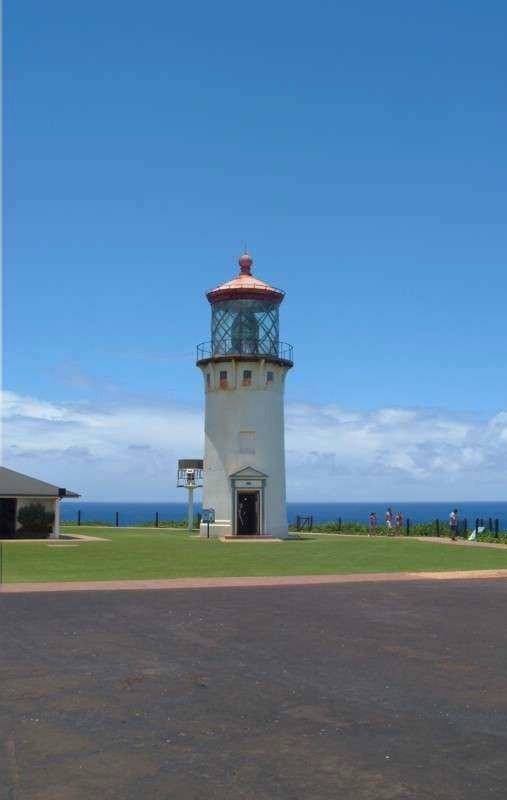
The Kilauea Lighthouse sits on the northernmost point of the main Hawaiian islands, a dramatic clifftop promontory with sweeping views of the North Shore coastline in both directions. Built in 1913, it operated for nearly 70 years before being decommissioned and is now the centerpiece of the Kilauea Point National Wildlife Refuge.
It’s a great stop for first-time visitors. The views from the point are excellent. You can see the coast curving both west toward Hanalei and east toward the East Shore on a clear day — and the refuge is home to a thriving seabird colony including red-footed boobies, Laysan albatross, and wedge-tailed shearwaters nesting in the cliffs. The nēnē, Hawaii’s protected state bird, a native goose, also frequents the area. Like Kauai’s feral chickens, you’ll see nēnē around the island, but the lighthouse area is one of the more reliable spots.
Getting there: The lighthouse is located at the end of Kilauea Road off Route 56 in Kilauea. There is a dedicated parking area at the refuge entrance.
Cost: $10/vehicle entrance fee to the wildlife refuge. Hours: Tuesday through Saturday, 10am–4pm (closed Sunday and Monday; confirm current hours at fws.gov before visiting as these can change seasonally).
East Shore Sights
‘Opaeka’a Falls
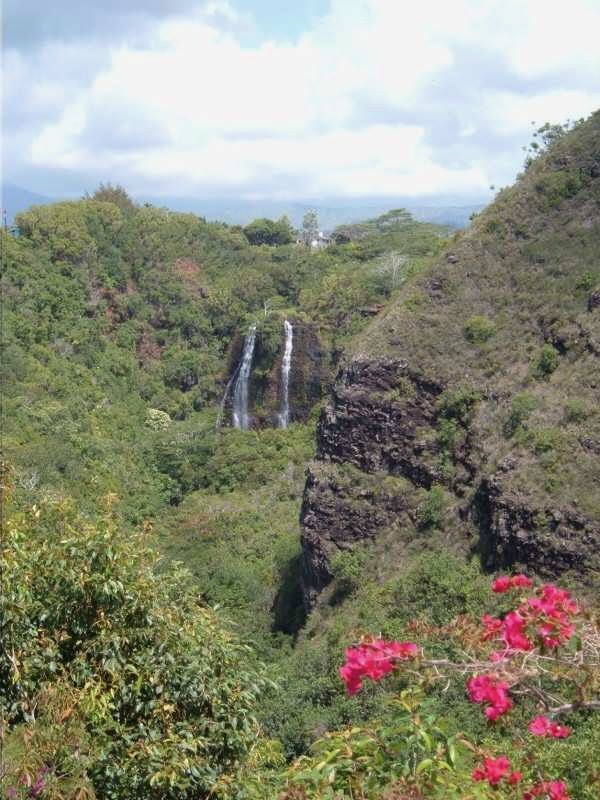
‘Opaeka’a Falls is the most accessible waterfall on Kauai, a beautiful 151-foot cascade visible directly from a roadside lookout with no hiking required. The name means “rolling shrimp” in Hawaiian, referring to the freshwater shrimp that were once abundant in the stream below. The falls are at their most dramatic after rain, when the volume increases and the mist rises above the valley.
The drive to the lookout is also worth doing for its own sake. Route 580 climbs through lush farmland and forest with views of the Wailua Valley and Mt. Wai’ale’ale on clear days.
Getting there: From Kuhio Highway (Route 56), turn onto Route 580 (Kuamo’o Road) just north of the bridge over the Wailua River. Continue approximately 2 miles to the lookout on the right side of the road. Parking is available at the lookout. The drive takes about 15 minutes from Lihue. While you’re on Route 580, continue up the road. The Kuilau Ridge trailhead is further along and worth combining into the same outing. See our best hikes guide for details.
Cost: Free. Hours: Always accessible.
Wailua Falls
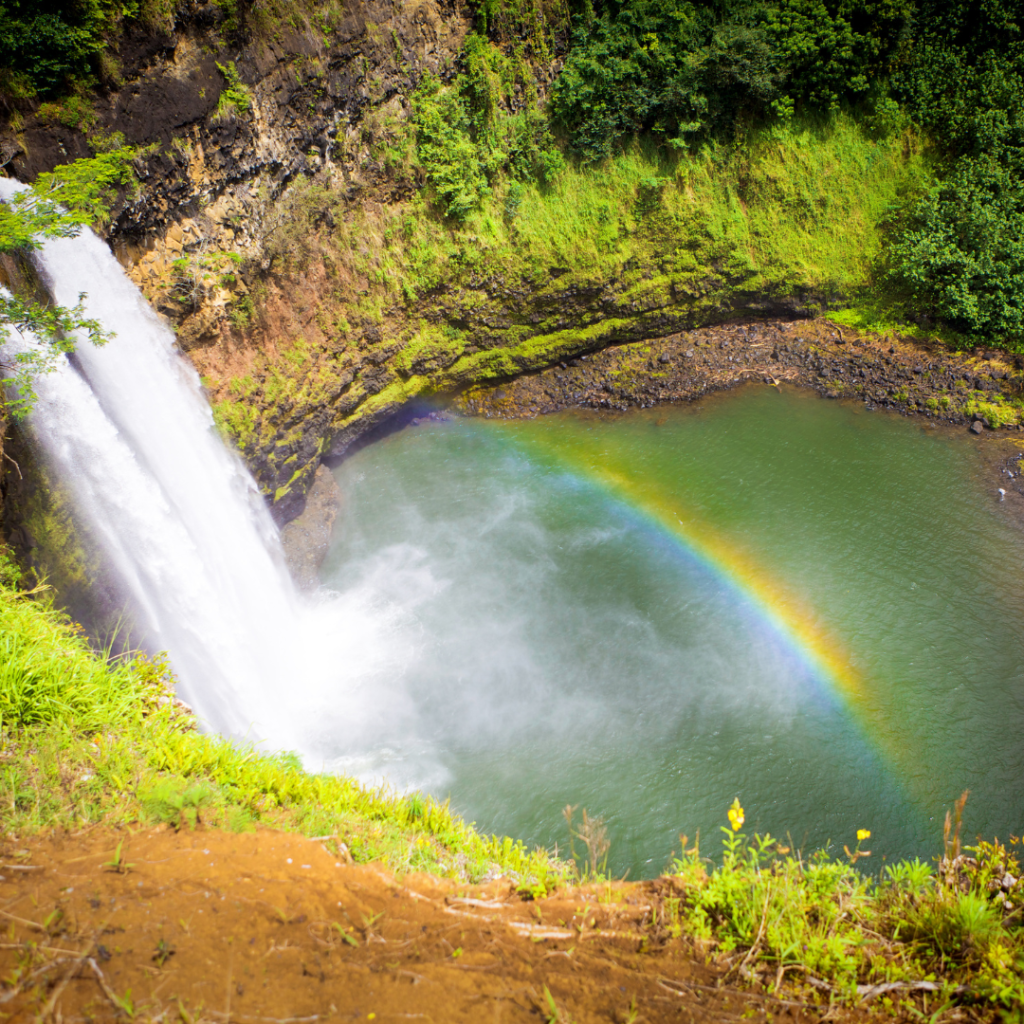
Wailua Falls is among the most photographed waterfalls in Hawaii, a dramatic 173-foot double cascade. Like ‘Opaeka’a Falls, it’s accessible directly from the road without any hiking, making it one of the easiest spectacular sights on the island.
The falls are most impressive after rainfall, when the volume and mist are at their peak. The viewing area is at the top of the falls looking down. The perspective is dramatic even on a dry day.
Getting there: From Kuhio Highway in Lihue, turn onto Route 583 (Ma’alo Road). Continue approximately 4 miles to the lookout on the right. The drive takes about 15 minutes from Lihue.
Cost: Free. Hours: Always accessible.
Ke Ala Hele Makalae — The Kauai Bike Path

The Kauai Bike Path (officially the Ke Ala Hele Makalae, meaning “the path that goes by the coast”) runs 8 miles along the East Shore from just south of Kapa’a north toward Anahola. It’s a wide, paved coastal trail with consistent ocean views and easy access from multiple points in Kapa’a town — one of the best ways to experience the Coconut Coast without being in a car.
Bike rentals are widely available in Kapa’a, typically running around $25 for two hours or $40 for four. Two hours is plenty of time for a satisfying ride, enough to get a feel for the coastline without overdoing it. The path is flat, smooth, and suitable for all ages and fitness levels.
Our tip: This is our traditional last-morning-on-the-island activity. After checking out of the rental, we drop bags in the car and ride the path for two hours before lunch at one of the Kapa’a food trucks and a final shave ice at Hee Fat. See our one-week itinerary for how we structure the last day.
Cost: Bike rental ~$25–$40. Access: Multiple trailheads throughout Kapa’a; easy parking.
Nounou Mountain — Sleeping Giant
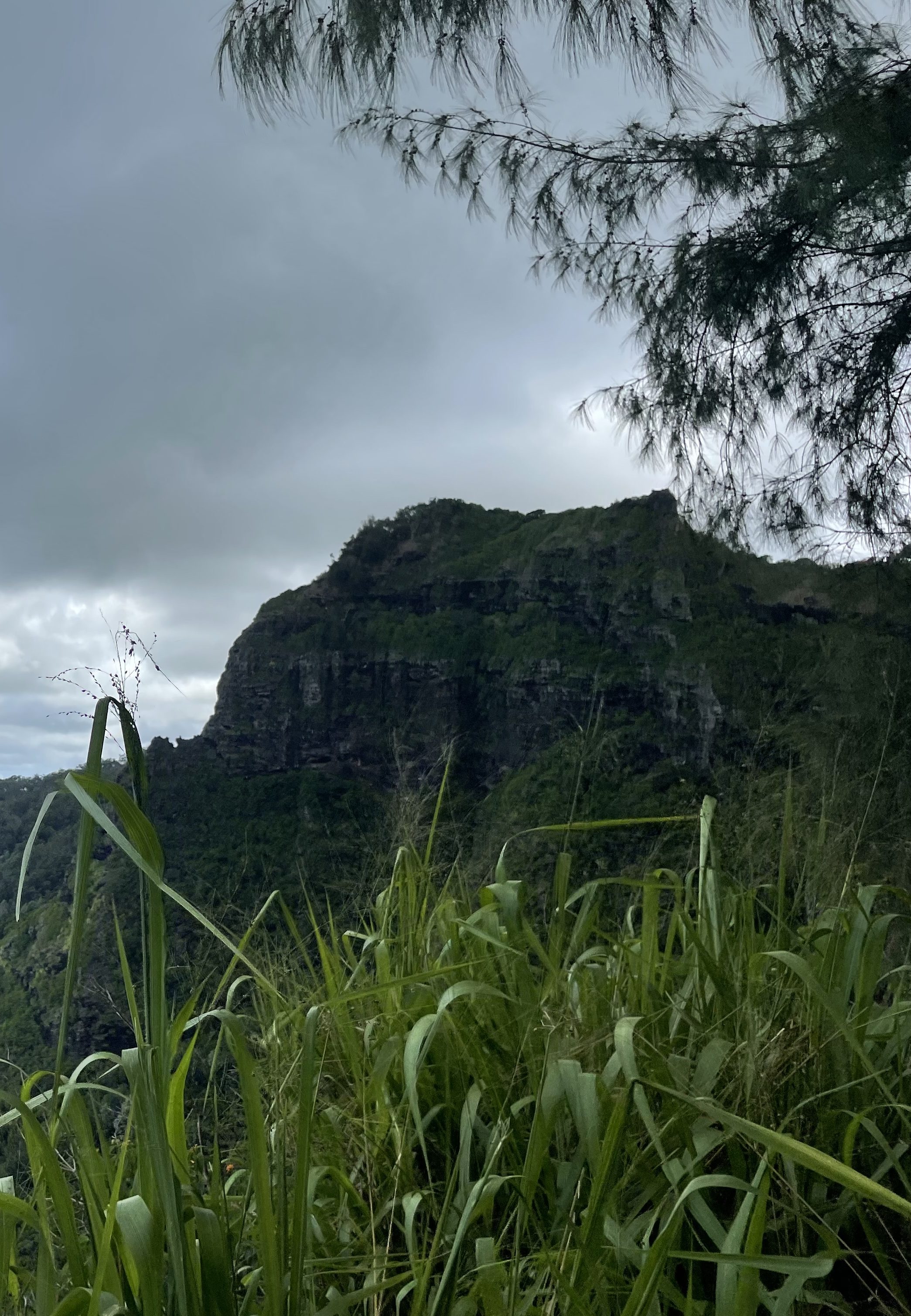
Driving the Kapa’a bypass on Route 581, you’ll notice a ridgeline that looks unmistakably like a figure lying on its back, hands resting on the chest, face visible in profile against the sky. This is Nounou Mountain, known locally as the Sleeping Giant. He rests alongside the Wailua River valley, with Mt. Wai’ale’ale visible behind him on clear days. He’s easy to spot, as he rests alone in the Wailua Valley.
The Sleeping Giant is worth knowing about for two reasons: it’s a fun piece of Kauai landscape lore that most visitors notice and wonder about, and the trail up the ridgeline is one of the more rewarding hikes on the East Shore. The view from the giant’s “head” after a steep, muddy, 1,000-foot climb takes in the entire East Shore coastline and much of the island’s interior. See our best hikes guide for the full trail breakdown.
Getting there: Visible from Route 581 (Kamalu Road) in Wailua. The trailhead is on Haleilio Road.
South Shore Sights
Honu at Poi’pu Beach
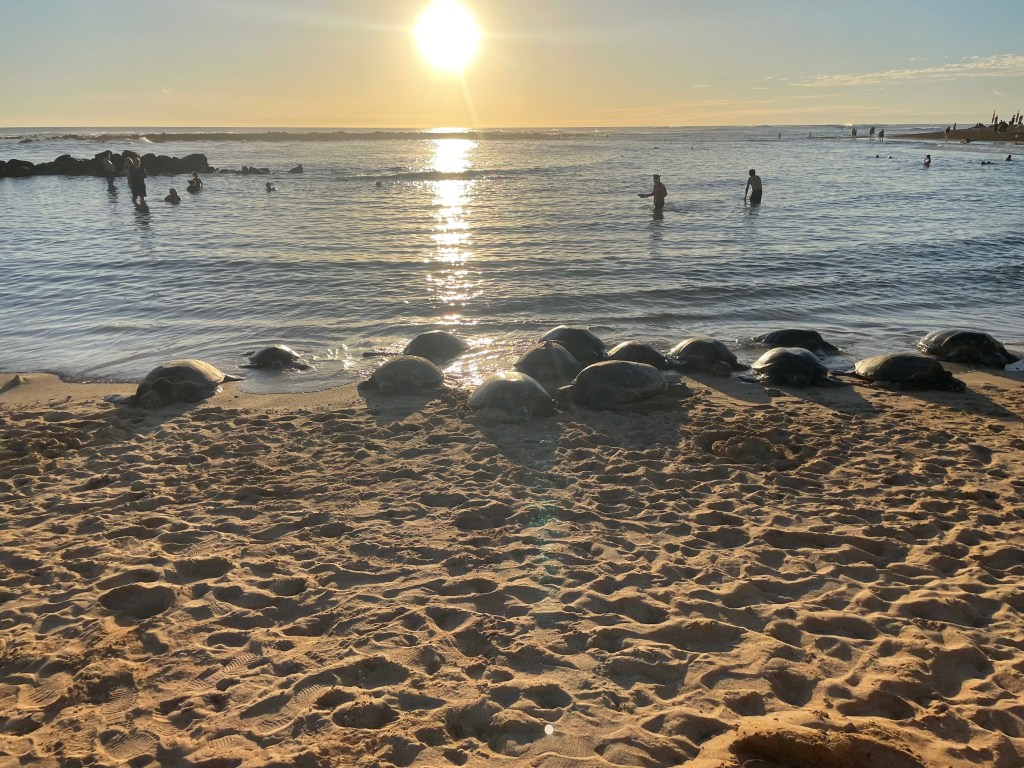
Poi’pu Beach Park is the best place on the island to see Hawaiian green sea turtles, or honu, up close. Turtles regularly haul out on the beach throughout the afternoon and evening to rest, and after sunset the numbers can be extraordinary. We’ve counted well over 50 turtles on the beach on multiple visits. The sight of dozens of these ancient animals resting on the sand as the last light fades behind them is one of the most remarkable wildlife encounters available anywhere in Hawaii.
The turtles are a federally protected species. Be sure to stay at least 10 feet away at all times, both on the beach and in the water. Do not approach, touch, or disturb them. Wildlife cones are typically placed around resting turtles by the beach attendants, which makes it clear where the boundary is.
Best timing: Arrive at Poi’pu Beach in the late afternoon and stay through sunset. The turtles begin coming ashore as the day cools, and the numbers increase as the evening progresses. The light at golden hour with the turtles in the foreground is extraordinary for photography.
See our best beaches guide for full details on Poi’pu Beach Park including parking, facilities, and swimming conditions.
Spouting Horn
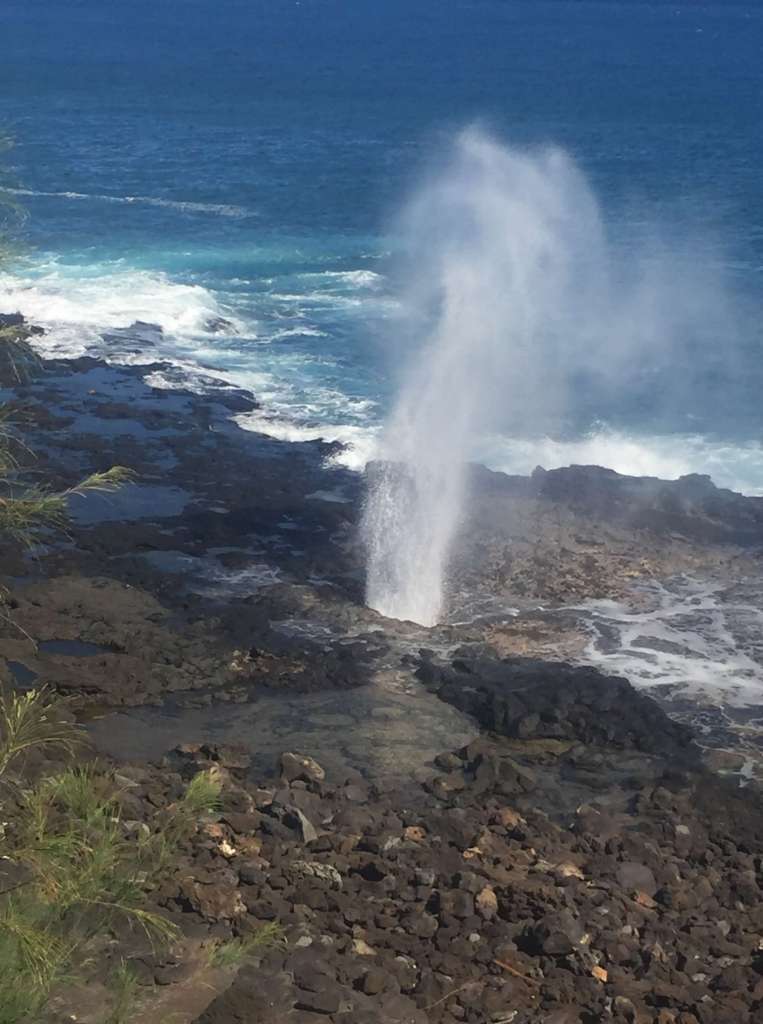
Spouting Horn is a natural blowhole on the South Shore. Ocean waves crash into an ancient lava tube and the compressed water and air explode upward through a hole in the rock shelf, launching a spout of water as high as 50 feet into the air with a loud, distinctive hiss. It’s one of those sights that’s more impressive in person than any photo can convey.
The spout height and frequency varies with surf conditions. Higher surf produces more dramatic and frequent eruptions. The surrounding lava rock shelf is fascinating in its own right, and there’s a small market of local artisans selling jewelry and crafts at the lookout area.
Getting there: From Poi’pu Beach, take Lawa’i Road west approximately 3 miles. There is a dedicated parking area at the Spouting Horn Park lookout. The drive takes about 10 minutes from Poi’pu.
Cost: Free. Hours: Always accessible. Best conditions: Higher surf days produce the most dramatic eruptions; check surf conditions before visiting if you want maximum impact.
West Shore Sights
Kalalau Lookout
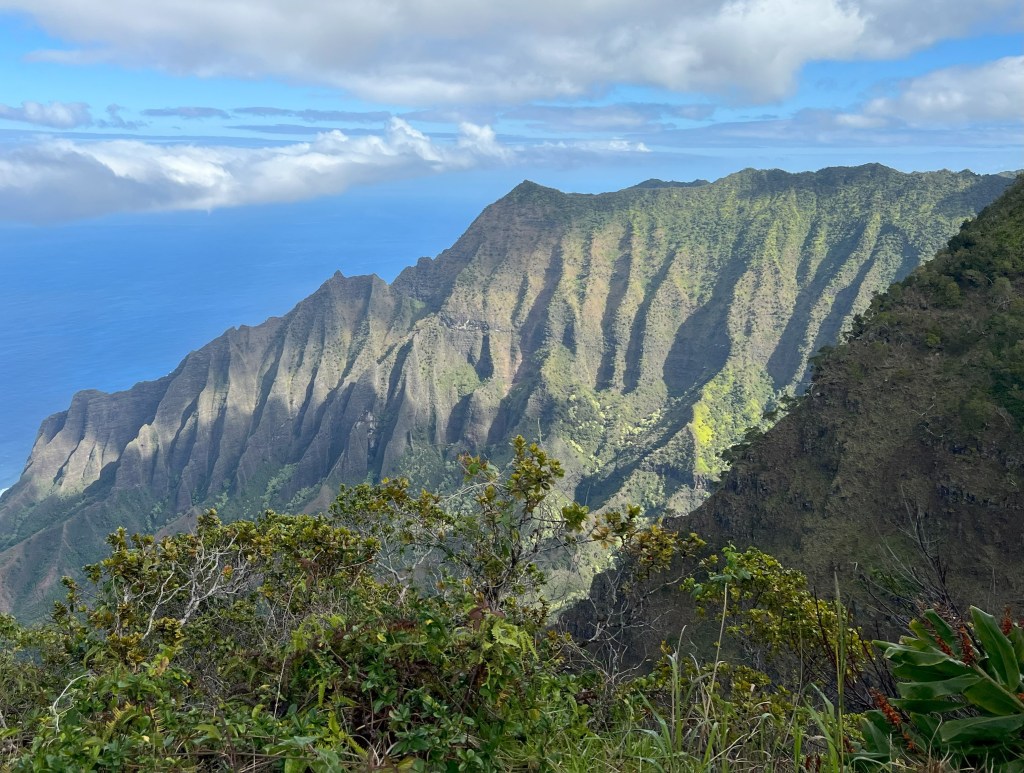
Continue past Waimea Canyon and up into Kokee State Park, and at nearly the end of the road you’ll reach the Kalalau Lookout, a viewing platform perched at 4,000 feet above the Kalalau Valley on the Na Pali Coast. This is one of the most photographed spots in Hawaii and one of the most dramatic perspectives on the island: the Kalalau Valley sweeping down 4,000 feet to the Pacific, the Na Pali cliffs on either side, and on a clear day the full length of the Na Pali coastline visible to the west.
The same valley far below is the destination of the full 11-mile Kalalau Trail. Seeing it from above before or after hiking toward it on the coast gives you a completely different understanding of the scale of what you’re looking at. On many days, clouds fill the valley below the lookout, which creates its own extraordinary effect. You’re standing above the clouds, looking down into a jungle valley. It’s one of those sights that doesn’t seem quite real.
Getting there: Continue on Route 550 past Waimea Canyon approximately 14 miles to the Pu’u O Kila Lookout parking area at the end of the road. The Kalalau Lookout is just below the parking area. The drive from Waimea town takes about 45 minutes.
Cost: Included in the $10/vehicle Waimea Canyon entrance fee. Best time: Morning, before clouds build in the afternoon. See our best hikes guide for the Pihea Vista Trail, which begins from this same parking area.
Waimea Canyon – The Grand Canyon of the Pacific
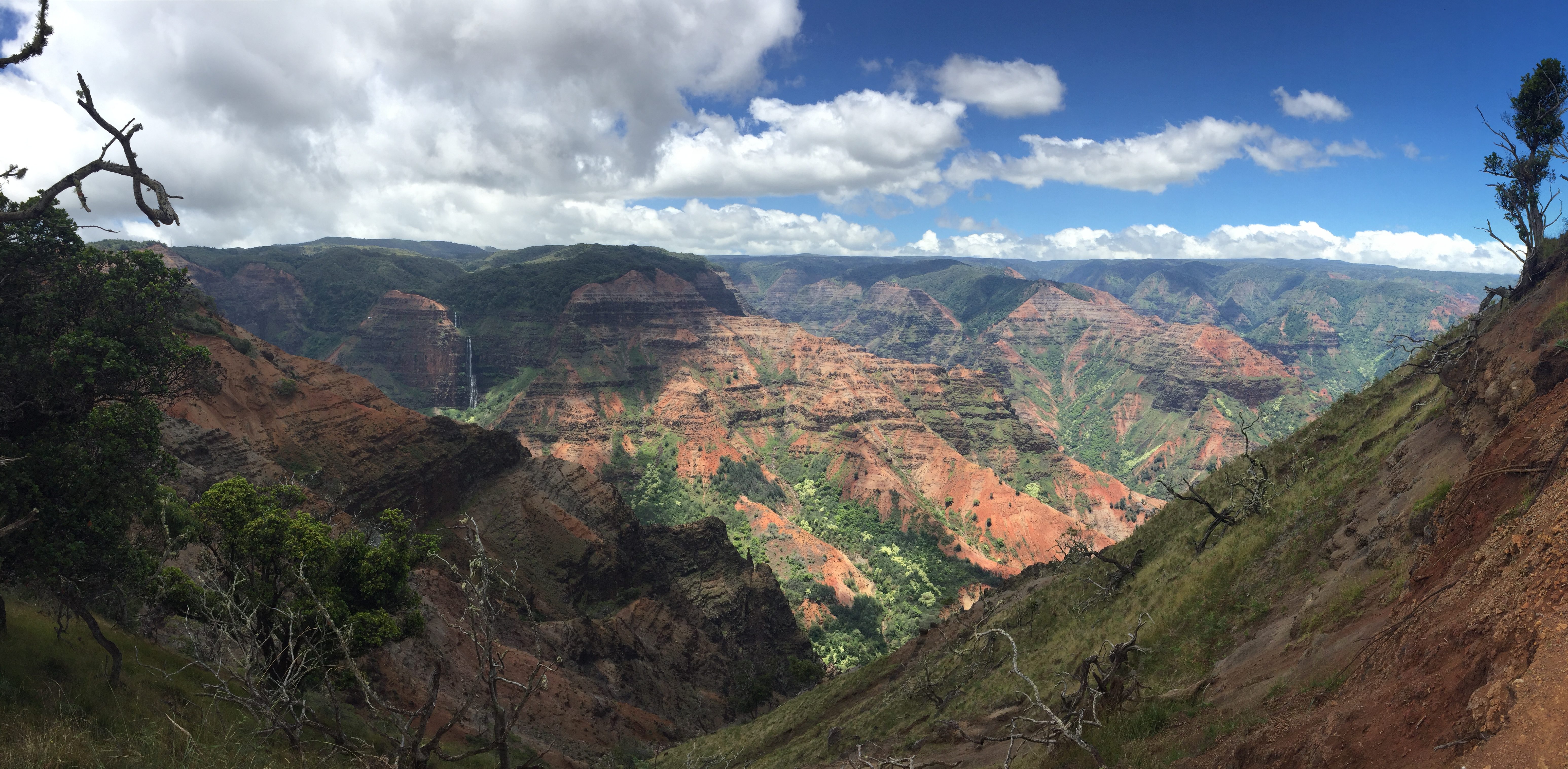
The Waimea Canyon is Kauai’s most dramatic inland sight and one of the most extraordinary landscapes in the Pacific. Carved by the Waimea River over millions of years into ancient volcanic rock, the canyon stretches 10 miles long and drops 3,600 feet, earning its nickname as the Grand Canyon of the Pacific. The red, orange, and brown canyon walls are striking against the green jungle that clings to the rim.
The canyon road (Route 550) climbs from Waimea town on the West Shore to over 4,000 feet, with multiple pull-offs and overlooks along the way. Each offers a slightly different perspective on the canyon – some looking down into the gorge, others looking across at the opposite wall. The Canyon Lookout and Pu’u Hinahina Lookout are the two main overlooks. Give yourself at least 2–3 hours for the canyon, more if you plan to hike. There’s often a vendor selling pineapple and other fruit at the Canyon Lookout parking lot.
Getting there: From Kekaha or Waimea on the West Shore, take Route 550 (Kokee Road) up the mountain. The canyon entrance is about 7 miles from Waimea town.
Cost: $10/vehicle entrance fee, payable at any overlook. Hours: Park is always open; visitor center hours vary. See our one-week itinerary for how to combine Waimea Canyon with Kokee State Park into a full day.
Frequently Asked Questions: Kauai Attractions {#faq}
What are the must-see sights in Kauai?
Our must-do’s after nearly 20 years of visits: Waimea Canyon and the Kalalau Lookout (combine them into one full day), Hanalei Bay and the pier, the Walina Terrace at sunset, Wailua Falls and ‘Opaeka’a Falls (both road-accessible, easy to combine), and the honu at Poi’pu Beach at dusk. Together these cover all four shores and give you a complete picture of what makes Kauai extraordinary.
Is Queen’s Bath safe to visit?
Queen’s Bath is safe to visit in summer on calm days with no surf advisories in effect, but it has claimed lives and should be treated with serious caution. Never visit in winter, never when surf is elevated, and never turn your back on the ocean while on the lava shelf. Check conditions before you go and err on the side of caution if anything looks questionable.
Is the Kalalau Lookout worth visiting?
Absolutely! It’s one of the most dramatic views in all of Hawaii and requires no hiking whatsoever. Drive to the end of the Kokee Road and you’re there. The only variable is cloud cover; mornings tend to be clearer. Even on a partly cloudy day, with clouds filling the valley below, it’s extraordinary. Combine it with Waimea Canyon and give the whole outing a full day.
How much does it cost to visit Waimea Canyon?
The entrance fee is $10/vehicle, payable at any overlook along the canyon road. This fee also covers access to Kokee State Park and the Kalalau Lookout above. It’s one of the best-value experiences on the island.
Can you see the Kilauea Lighthouse for free?
No; the Kilauea Point National Wildlife Refuge charges $10/vehicle to enter. The lighthouse and seabird viewing are worth the fee, but if budget is a concern, the views of the lighthouse and the North Shore coastline are also partially visible from the road outside the refuge entrance at no cost.
What time should I visit Poi’pu Beach to see sea turtles?
Arrive in the late afternoon, around 3–4pm, and stay through sunset. The turtles begin hauling out as the afternoon cools and the numbers build through the evening. After dark, the beach can have extraordinary concentrations of resting honu. See our best beaches guide for more on Poi’pu Beach Park.
For more on planning your Kauai trip, see our one-week itinerary for a complete day-by-day guide that incorporates many of these sights, our best hikes guide for the trails that connect to these locations, and our island orientation guide for help planning which sights to visit on which day.


Leave a Reply