Planning a trip to Kauai and not sure where to start? Understanding how the island is laid out — and why each shore looks, feels, and behaves so differently — is the single most useful piece of knowledge a first-time visitor can have. It will shape where you stay, what you pack, and what you can realistically do on any given day.
After nearly 20 years of annual visits, we’ve experienced every shore of this island in every season. Here’s everything you need to know.
Quick Links
- The Geography Behind Kauai’s Climate
- What Makes Kauai Unique
- The North Shore
- The South Shore
- The East Shore
- The West Shore
- Where Should You Stay?
- Getting Around Kauai
- FAQ
The Geography Behind Kauai’s Climate
To understand Kauai, you first need a quick geography lesson — one that applies to all the Hawaiian islands but is especially important here.
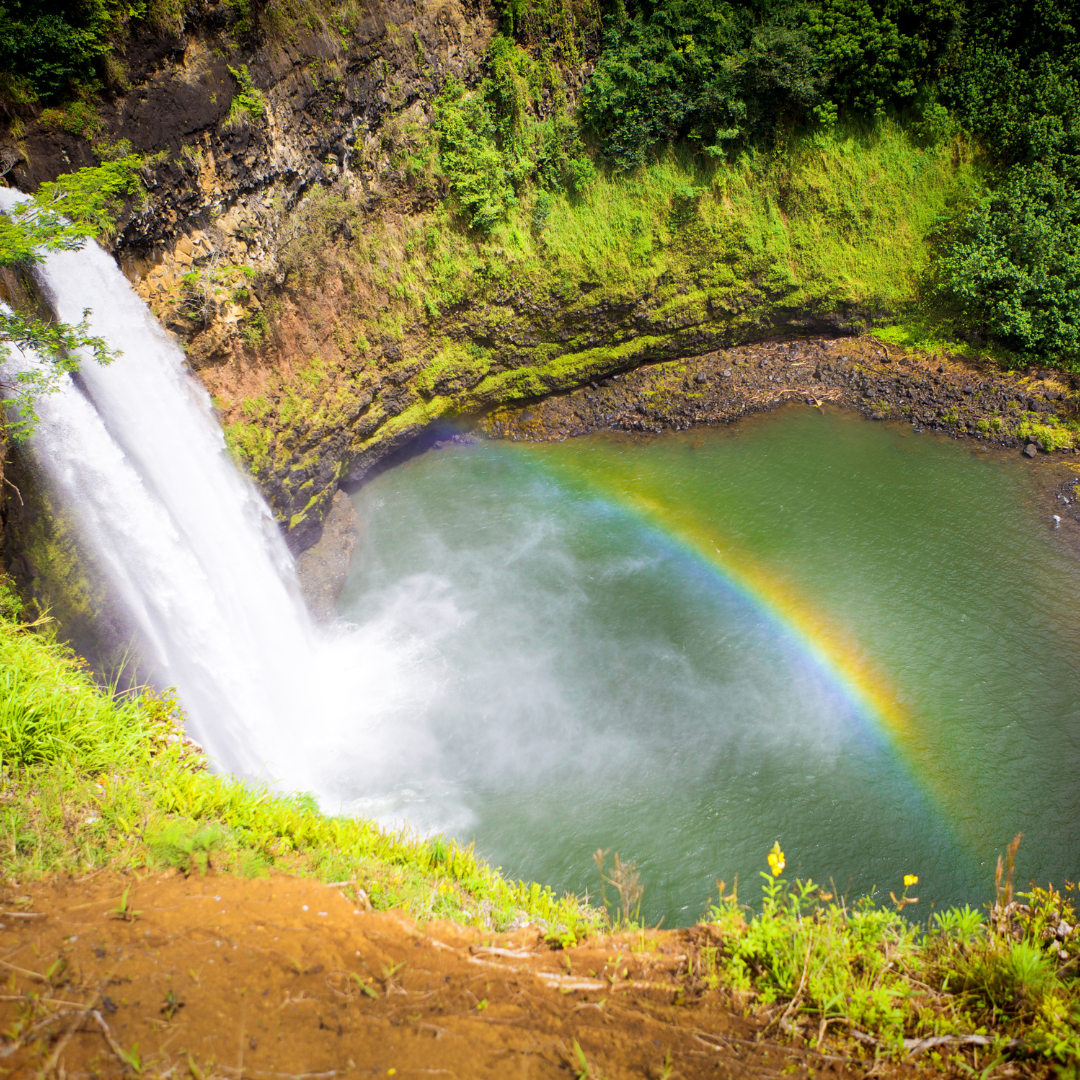
The Hawaiian islands were formed by volcanoes, which created tall, steep mountain interiors rising from the ocean floor. The trade winds that blow in off the Pacific hit these mountains and are forced upward. As the air rises and cools, moisture condenses and falls as rain on the windward (typically north and east) side of the island. By the time those winds reach the other side of the mountains, they’ve lost most of their moisture — creating drier, sunnier, almost desert-like conditions on the leeward (typically south and west) side.
You can tell immediately which side of the island you’re on. The windward side is lush, green, and tropical — dense jungle, waterfalls, and narrow winding roads. The leeward side looks more like the American Southwest: dry grass, red earth, and cacti. Yes, there are cacti in Hawaii. The contrast between the two sides of Kauai can be startling, even for experienced visitors.
What Makes Kauai Unique Among the Hawaiian Islands

Kauai is the oldest of the main Hawaiian islands, and it shows — in the most spectacular way. Millions of years of erosion have carved the island into something unlike anything else on earth: razor-edged ridges, thousand-foot sea cliffs, and valleys so deep and green they look like something from a fantasy film. (Several were, in fact — Jurassic Park was filmed largely on Kauai.)
What truly sets Kauai apart from Maui and Oahu is rainfall. Mt. Wai’ale’ale, the ancient shield volcano at the island’s center, receives over 450 inches of rain per year — making it one of the wettest places on earth. That rainfall feeds dozens of waterfalls and keeps the island extraordinarily green even on the drier leeward side. Unlike Maui or the Big Island, where the leeward shores can feel genuinely arid, even Kauai’s south shore maintains enough greenery to feel lush.
The flip side: Kauai’s weather is less predictable than the other islands. Brief rain showers can appear suddenly on any shore, especially on the North Shore in winter. Learning to read the sky — and embracing the rain as part of what makes the island so impossibly beautiful — is part of the Kauai experience.
The North Shore
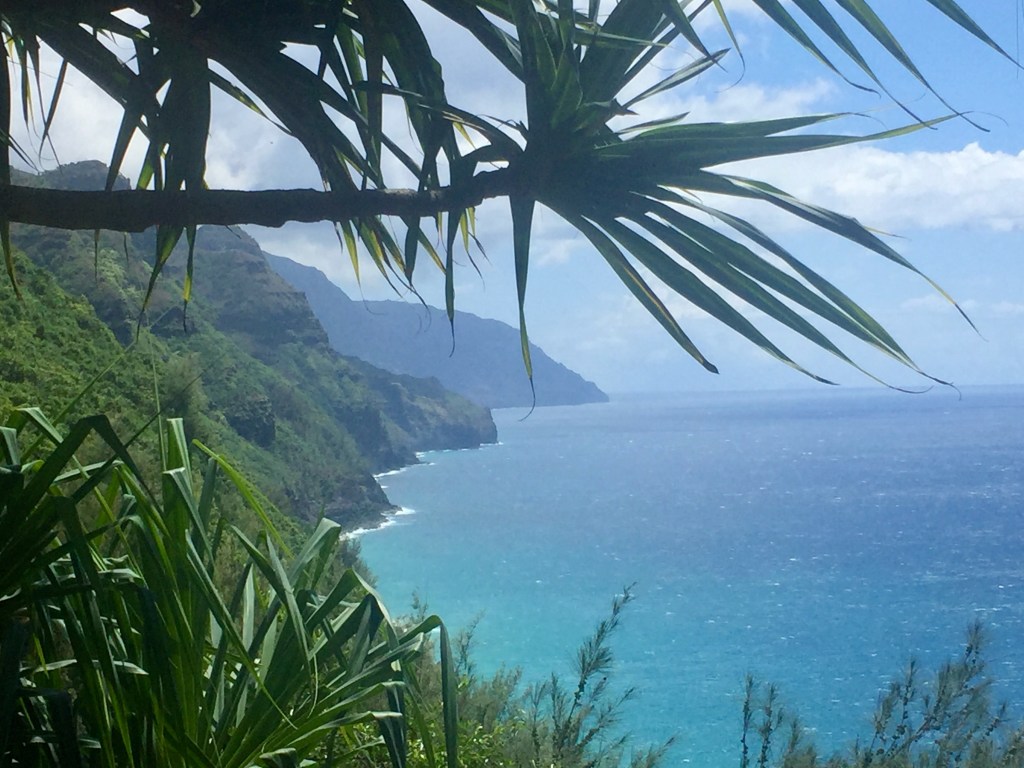
The North Shore is Kauai at its most dramatic. This is where the Na Pali Coast begins, where the Kalalau Trail carves along cliffs above the Pacific, and where Hanalei Bay — one of the most photographed bays in the world — reflects the jagged mountains behind it on calm mornings.
Top destinations: Hanalei, Princeville, Ha’ena, Kilauea, and Ke’e Beach.
Best time to visit: Summer (May–September). Winter swells from the north make North Shore beaches unsafe for swimming from roughly October through April, and the road to Ha’ena and Ke’e Beach can close during high surf. In summer, the North Shore transforms — Tunnels Beach and Anini Beach offer some of the best snorkeling in all of Hawaii, and Hanalei Bay is calm enough for paddleboarding, kayaking, and swimming.
Why we love it: The North Shore is where we base ourselves whenever we visit in summer. The scenery is simply unmatched — every drive feels like you’re moving through a painting, and the food and community in Hanalei town are genuinely excellent. Our North Shore guide covers the best beaches, hikes, restaurants, and activities in detail.
Don’t miss:
- Hiking the Kalalau Trail to Hanakapi’ai Beach — the best hike on the island. Read our full breakdown in our one-week Kauai itinerary.
- Snorkeling at Tunnels Beach (summer only) — see our Top 5 Snorkeling Spots in Kauai for the full breakdown.
- Sunset over Hanalei Bay from the pier or the overlook at Princeville — one of the best sunset views on the island.
- The food trucks in Hanalei — the most affordable and delicious dining on the North Shore.
The South Shore
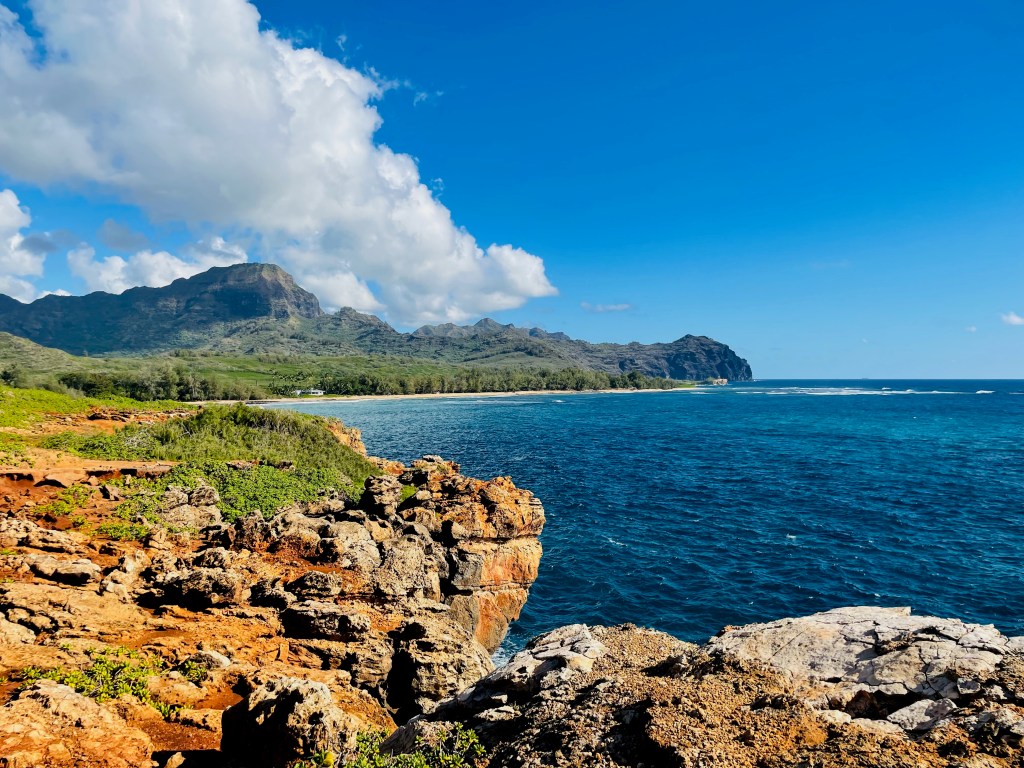
The South Shore is Kauai’s sunniest, most resort-friendly shore, and it’s the best option for winter visitors when the North Shore is socked in by swells and rain. Centered on Poi’pu, it offers reliable swimming, great snorkeling, excellent dining, and some of the most consistent beach weather on the island.
Top destinations: Poi’pu, Koloa, Lawa’i, Kalaheo, and Hanapepe.
Windward or leeward? The South Shore is on the leeward side, which means it’s drier, sunnier, and warmer than the North Shore — particularly in winter. It’s not desert-dry like the far west, but it’s dramatically more reliable for beach weather year-round.
Why we love it: We base ourselves on the South Shore every winter. The Lawai Beach Resort near Poi’pu has been a favorite for years — see our Budget-Friendly Kauai guide for details on accessing it through RedWeek. In winter, the South Shore also gives you prime whale-watching territory — humpbacks arrive in Hawaiian waters from December through April, and Shipwreck Beach is one of the best shore-side viewing spots on the island.
Don’t miss:
- Poi’pu Beach Park — the most family-friendly beach on the island, with a protected cove for children and frequent monk seal sightings.
- Da Crack burritos and Savage Shrimp — two of the best cheap eats on the South Shore, both near the Shops at Kukui’ula.
- Snorkeling at Lawa’i Beach — consistently excellent coral and fish, fewer crowds than Poi’pu. See our Top 5 Snorkeling Spots for details.
- Shipwreck Beach — dramatic, rocky, and spectacular for watching surf and winter whale sightings.
- The Maha’ulepu Heritage Trail — a stunning coastal hike from Shipwreck Beach along ancient sea cliffs. One of the few mudless hikes on Kauai (no approach shoes required).
The East Shore
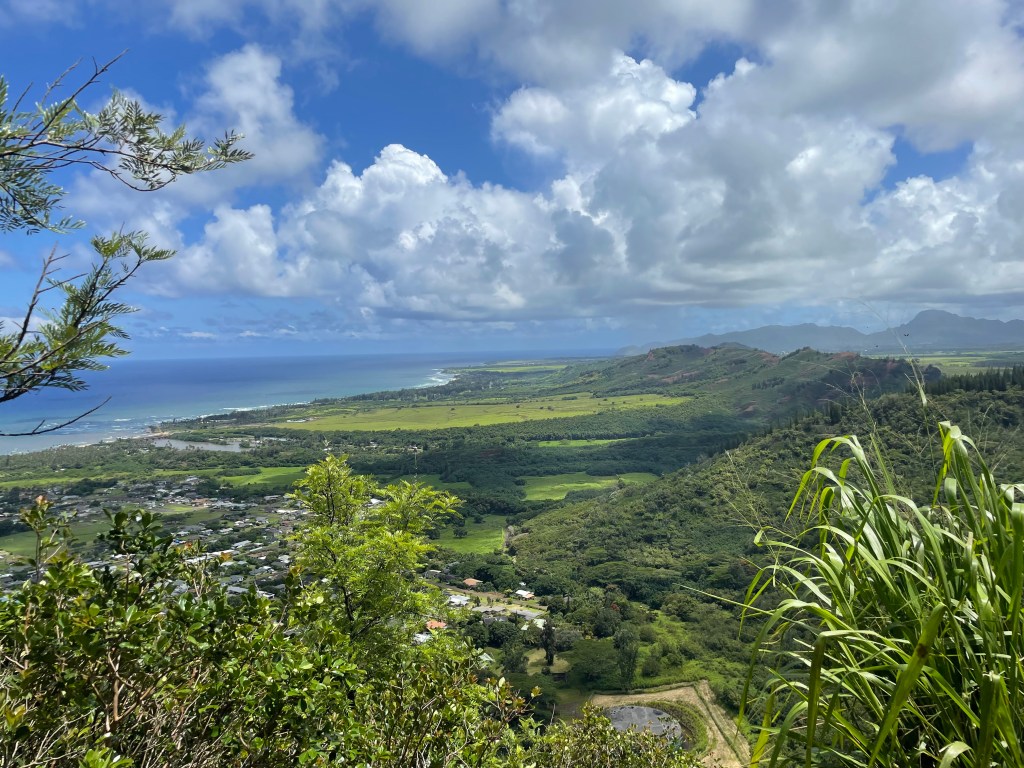
The East Shore — also called the Coconut Coast — is the most central and accessible part of Kauai. Anchored by Lihue (home to the airport) and Kapa’a, it’s where you’ll arrive, where most services are concentrated, and where the island feels most like a real community rather than a resort destination.
Top destinations: Lihue, Kapa’a, Wailua, and Waipouli.
Windward or leeward? The East Shore sits on the windward side of the island, which means it’s greener and wetter than the South Shore — but generally sunnier than the North Shore in winter, making it a solid year-round option.
Why we love it: The East Shore is the practical hub of the island. Costco, the best grocery stores, most car rental agencies, and the airport are all here. It’s also home to some underrated attractions that visitors based on the North or South Shore often skip.
Don’t miss:
- Kayaking the Wailua River to Secret Falls — the most fun and accessible adventure on the island. Read about it in our one-week itinerary.
- The Kauai Bike Path in Kapa’a — a paved coastal path perfect for a final-day activity before your evening flight.
- Opaeka’a Falls and Wailua Falls — both accessible directly from the road, no hiking required.
- The food truck park in Kapa’a — one of the best and most affordable places to eat on the island.
- Costco in Lihue — see our Budget-Friendly Kauai guide for why this belongs on every visitor’s itinerary.
The West Shore
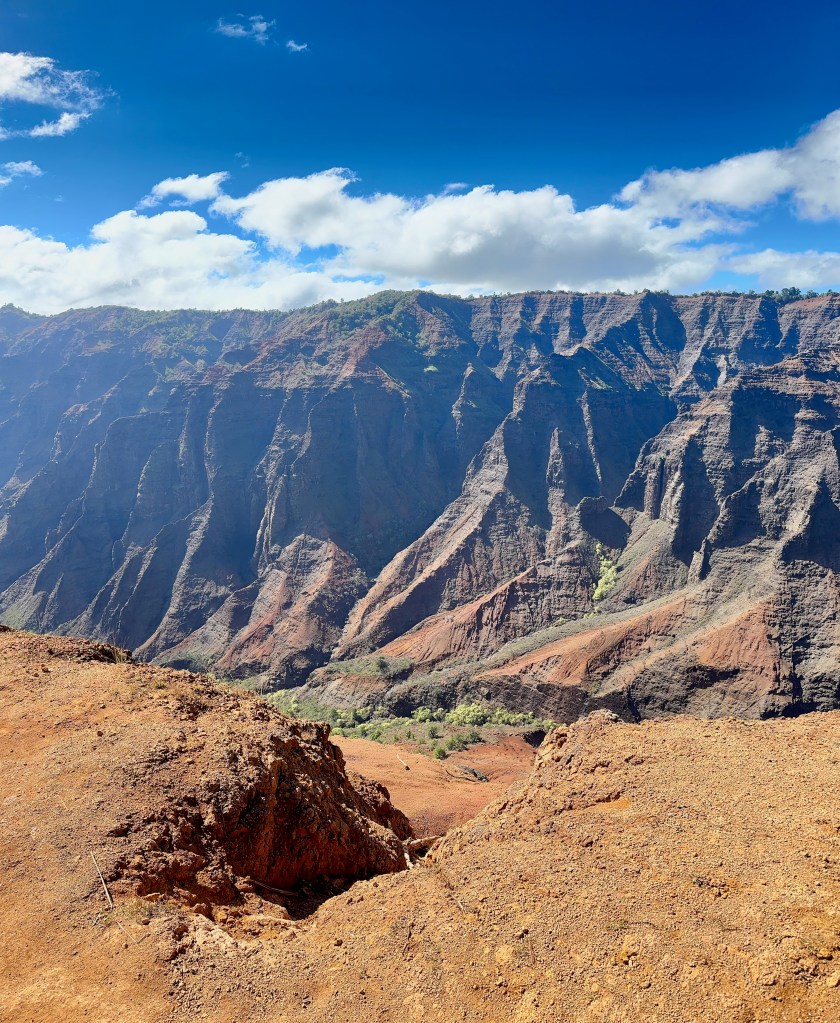
The West Shore is the wild, uncrowded, awe-inspiring part of Kauai that many visitors skip — and shouldn’t. This is where you’ll find Waimea Canyon, Kokee State Park, and the western trailheads of the Na Pali Coast. It’s the driest, most remote-feeling part of the island, and a full day spent here is one of the best days you can have on Kauai.
Top destinations: Hanapepe, Waimea Canyon, Koke’e State Park, and Polihale.
Windward or leeward? Firmly leeward — the West Shore is the driest part of Kauai. Waimea town sits at the mouth of Waimea Canyon and looks nothing like the jungle of the North Shore. The red-earth canyon walls and dry savanna around Polihale feel genuinely other-worldly.
Why we love it: No day on Kauai compares to a full day starting at Waimea Canyon and climbing up to Kokee. The canyon views rival the Grand Canyon. The Kalalau Lookout at 4,000 feet is one of the most dramatic perspectives in Hawaii — you’re looking down into the Na Pali valleys from above. Our one-week itinerary dedicates a full day to this area and explains exactly how to structure it.
Don’t miss:
- Waimea Canyon — drive up, stop at the overlooks, and if your legs are willing, hike the Canyon Trail down into the gorge itself.
- Koke’e State Park and the Kalalau Lookout — continue past the canyon up to 4,000 feet for views of the Na Pali valleys that will stay with you forever.
- Hanapepe town — a charming, artsy small town worth a 30-minute wander. Friday night art walk is excellent if your timing works out.
- Polihale Beach — the most remote, expansive beach on the island. Requires a 4WD or high-clearance vehicle to reach via a rough dirt road, but the isolation is extraordinary.
Where Should You Stay?
The short answer: it depends when you’re visiting.
Summer (May–September): Stay on the North Shore. The ocean is calm, the snorkeling is world-class, and the scenery is at its most dramatic. Base yourself in Princeville or Hanalei and day-trip to Waimea Canyon, the East Shore, and the South Shore from there.
Winter (October–April): Stay on the South Shore. North Shore beaches are largely inaccessible for swimming in winter, and the weather is more reliable in Poi’pu. You’ll still be able to day-trip everywhere. Winter also means humpback whale sightings from the South Shore — a genuine highlight.
Year-round: The East Shore (Lihue/Kapa’a) is the most central and often the most affordable option, though you’ll spend more time driving than if you’re based on your target shore.
For budget-conscious travelers, our Budget-Friendly Kauai guide covers timeshare rentals through RedWeek, the best budget hotel options on each shore, and how to save significantly on accommodation without sacrificing quality.
Getting Around Kauai
Kauai is the fourth-largest Hawaiian island, and despite looking small on a map, it takes longer to drive around than most visitors expect. The road does not circle the entire island — the Na Pali Coast on the northwest is inaccessible by car, so driving from the end of the road on the North Shore (Ke’e Beach) to the end of the road on the West Shore (Polihale) requires going back through Lihue. Plan on at least two hours for that crossing.
You need a rental car. Kauai’s public bus system (the Kauai Bus) runs limited routes and won’t get you to the North Shore trailheads, Waimea Canyon, or most beaches. Rideshare (Uber/Lyft) is available but expensive — a ride from the airport to Princeville can run $80–$120. A rental car is essential, full stop.
For the best rates on rental cars, we recommend checking Turo (peer-to-peer car sharing, often $20–$40/day) and Costco Travel before booking with a major agency. See our Budget-Friendly Kauai guide for the full rundown. Book early — car inventory on Kauai is limited, especially in summer and during the holidays.
A few driving tips:
Leave earlier than you think you need to for the North Shore in summer — trailhead parking fills up fast, and road congestion near Hanalei (the single-lane bridge) can add 20–30 minutes to your trip.
The Kuhio Highway (Route 56) connects Lihue to the North Shore. Traffic through Kapa’a can be slow, especially in the morning.
The Kaumualii Highway (Route 50) heads west toward Waimea Canyon and Kokee.
Tunnel of Trees on Maluhia Road heading into Koloa on the South Shore is a beautiful, canopied drive worth taking at least once.
Frequently Asked Questions About Kauai’s Geography
What is the difference between the North Shore and South Shore of Kauai?
The North Shore is lush, dramatic, and home to the island’s most spectacular scenery — the Na Pali Coast, Hanalei Bay, and the Kalalau Trail. It’s best in summer when the ocean is calm. The South Shore is sunnier, drier, and more resort-friendly, with reliable beach weather year-round and great snorkeling at Poi’pu and Lawa’i Beach. Winter visitors are better served by the South Shore; summer visitors should prioritize the North.
Which side of Kauai is the wettest?
The windward (north and east) side receives the most rainfall. Mt. Wai’ale’ale at the island’s center is one of the wettest spots on earth, with over 450 inches of rain annually. The North Shore — particularly the Ha’ena area near Ke’e Beach — can receive significant rainfall especially in winter. The South and West shores are considerably drier.
Do you need a rental car in Kauai?
Yes, absolutely. Kauai has very limited public transportation, and the island’s best spots are spread across different shores. There is no way to adequately experience Kauai without a car. See our Budget-Friendly Kauai guide for tips on finding the best rental rates.
How long does it take to drive around Kauai?
You can’t drive all the way around — the Na Pali Coast on the northwest is inaccessible by road, so driving from the North Shore to the West Shore requires returning through Lihue. A full circuit from Ke’e Beach (end of the North Shore road) around through Lihue to Polihale (end of the West Shore road) takes roughly 2.5–3 hours with no stops. Budget more time than you think you need.
What is Kauai known for?
Kauai is known for being the most natural and least developed of the major Hawaiian islands. Its defining features are the Na Pali Coast — 17 miles of dramatic sea cliffs accessible only by trail, boat, or helicopter — and Waimea Canyon, dubbed the “Grand Canyon of the Pacific.” The island is also famous for its extraordinary lushness (Mt. Wai’ale’ale is one of the wettest places on earth), its world-class hiking and snorkeling, and its relatively uncrowded, undeveloped character compared to Oahu and Maui.
Is Kauai good for first-time Hawaii visitors?
Kauai is an excellent choice for first-time visitors who want natural beauty, outdoor adventure, and a less commercialized experience than Oahu. That said, Kauai rewards visitors who do their research — the weather varies dramatically by shore and season, car rental is essential, and some of the best experiences (the Kalalau Trail, Na Pali boat tours) require advance planning and permits. Use our one-week Kauai itinerary as your starting point.
Ready to start planning? See our one-week Kauai itinerary for a complete day-by-day guide, our Budget-Friendly Kauai guide for tips on saving money on flights, accommodation, and car rentals, and our Kauai Packing List to make sure you arrive prepared. Questions? Leave a comment below — we read and respond to every one.


Leave a Reply