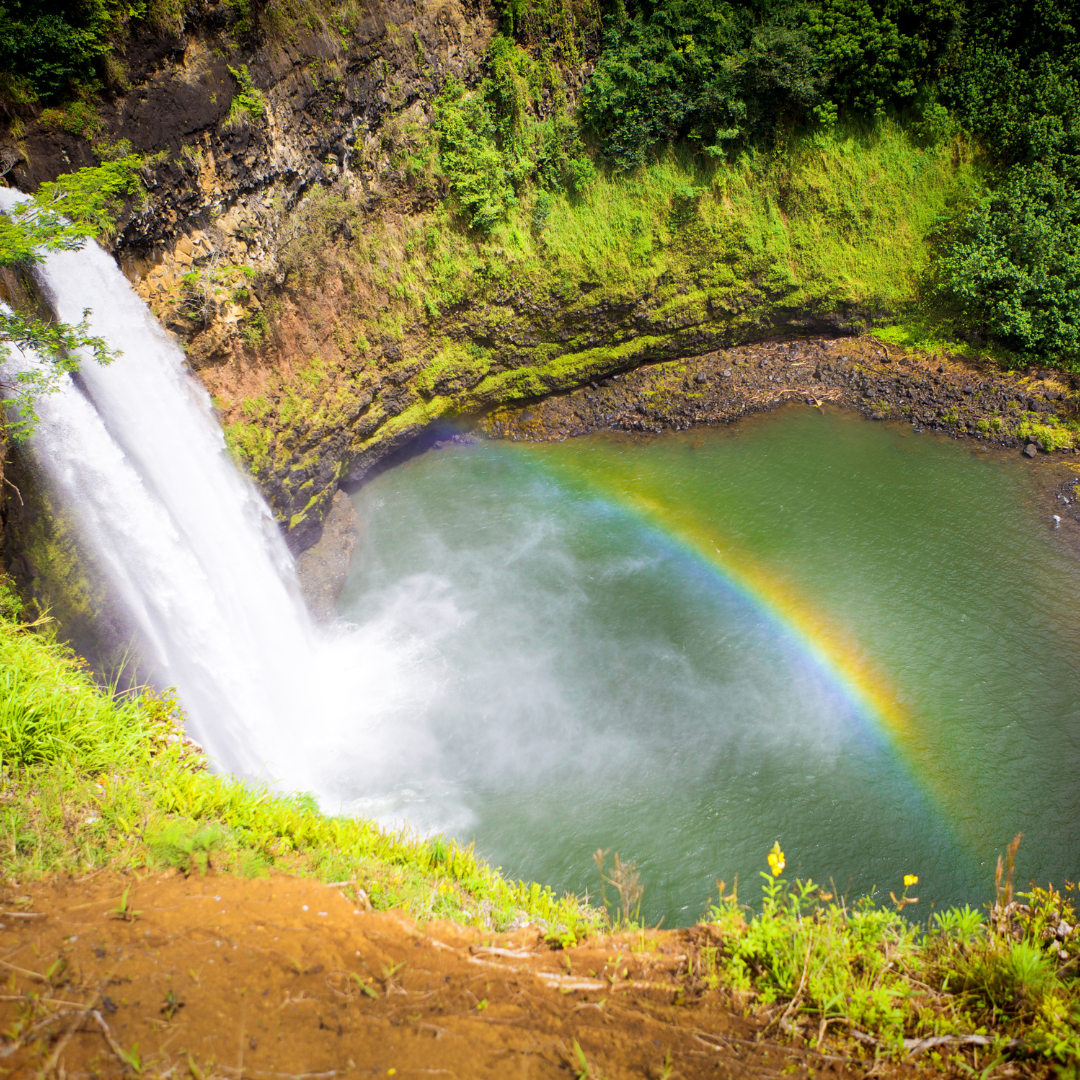
Let’s start with a quick geography lesson.
All Hawaiian islands share geographic features that impact the climate across the islands. The islands were formed by volcanos, giving them tall mountains in the interior that stretch into plains along the shores. In fact, the tallest mountain in the world (from base to summit) is Mauna Kea on the Big Island. The trade winds blowing in off the ocean create predictable weather patterns across the islands due to the mountainous interiors. As the winds blow in and over the mountains, the air cools and water vapor condenses and falls as rain showers. This side of the island is known as the windward side. On the other side of the mountains, the winds lose their moisture, creating drier conditions with less rainfall. This side of the island is the leeward side. You can easily recognize which side of the island you’re on. The wetter, windward side will be lusher, greener, and more tropical, while the drier leeward side will look more like the grassy plains of the midwest or even deserts. In fact, don’t be surprised to see cacti along the leeward sides of islands in Hawai’i.
The windward side of the islands is typically along the northern and eastern coasts. On Maui, for example, the windward side is predominantly along the eastern shore, creating the tropical conditions you’ll find on the road to Hana. West and south Maui, while known for its beautiful beaches, is much drier with less vegetation.
Kauai’s Unique Features
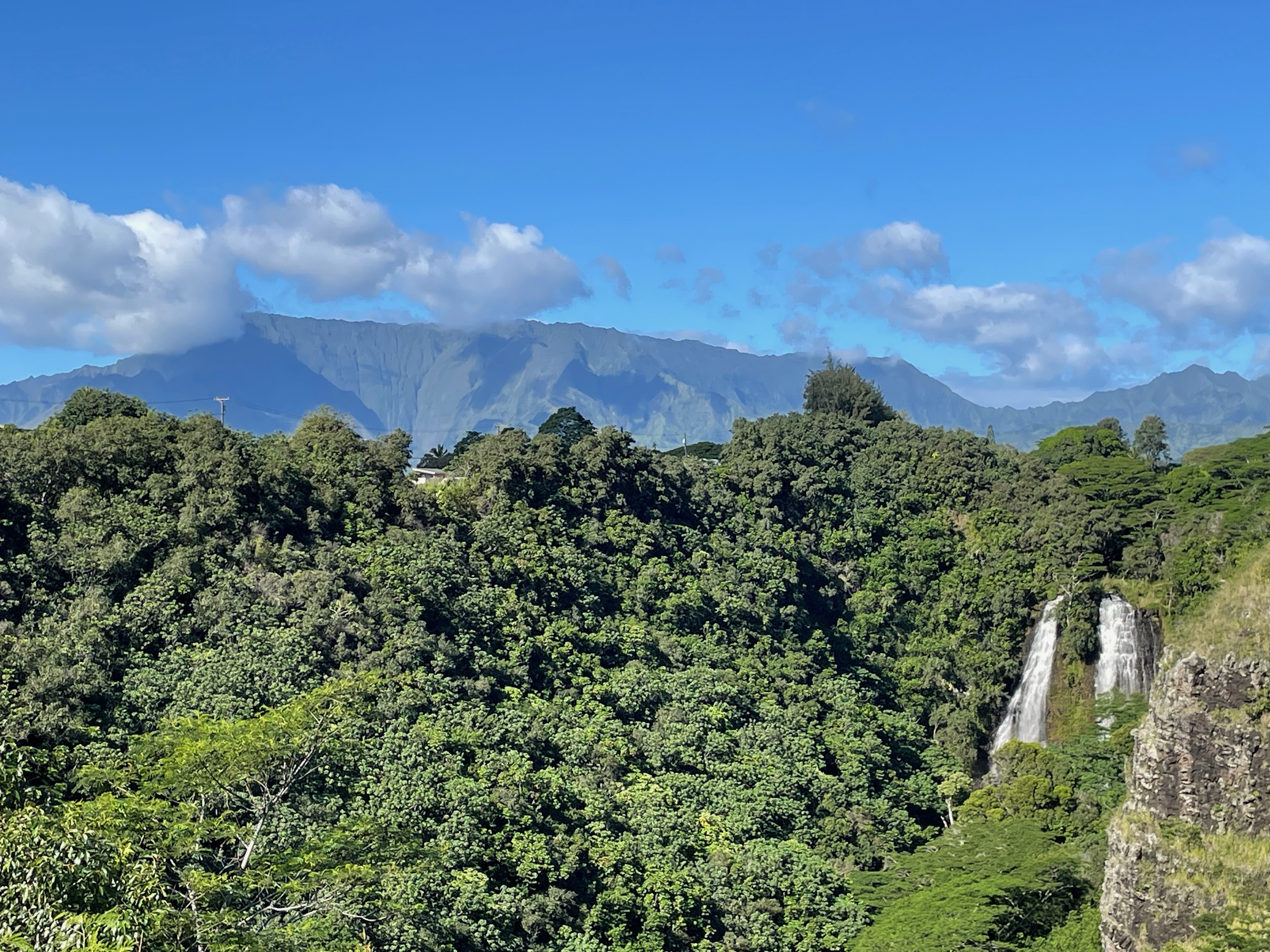
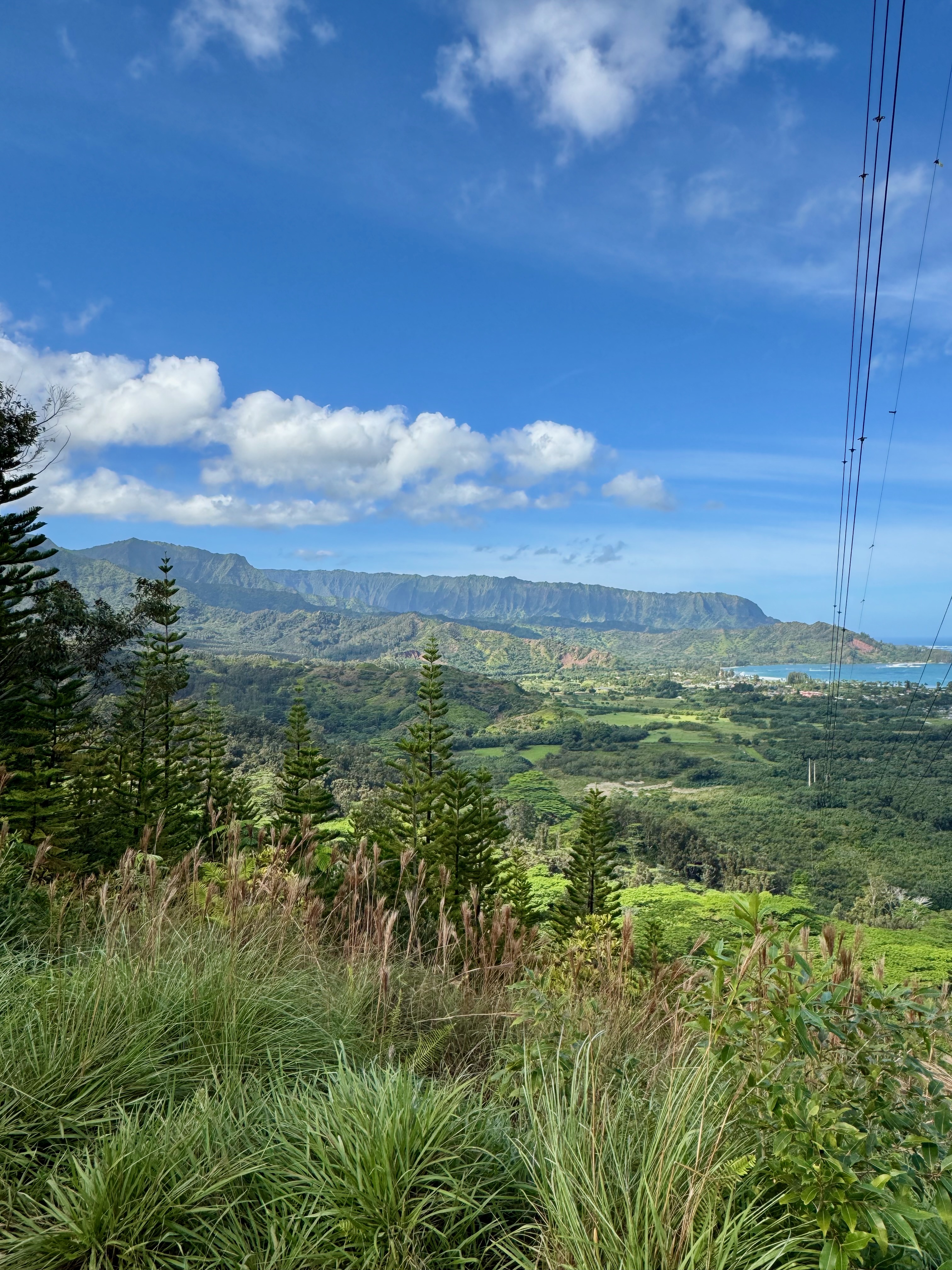
Kauai is unique among the Hawaiian islands in that it sees the most rainfall, including even on the leeward side. In fact, Mt. Wai’ale’ale (the shield volcano that helped form Kauai and sits at the island’s center) is one of the wettest places on earth, with over 450 inches of rain per year. As the oldest of the Hawaiian islands, Kauai also has had the most time to evolve from the volcanic eruptions that created it. Unlike Maui and the Big Island, Kauai’s mountains are covered in lush green vegetation, and waterfalls are plentiful along the mountains on its windward side.
The Windward Side
Like Maui, the windward side on Kauai is on the north and east shores. Top destinations include Hanalei, Princeville, Ha’ena, Kilauea, Kapa’a, and Wailua. For more on each, be sure to check out our guides to each for the best beaches, dining, hikes, and activities.
The Leeward Side
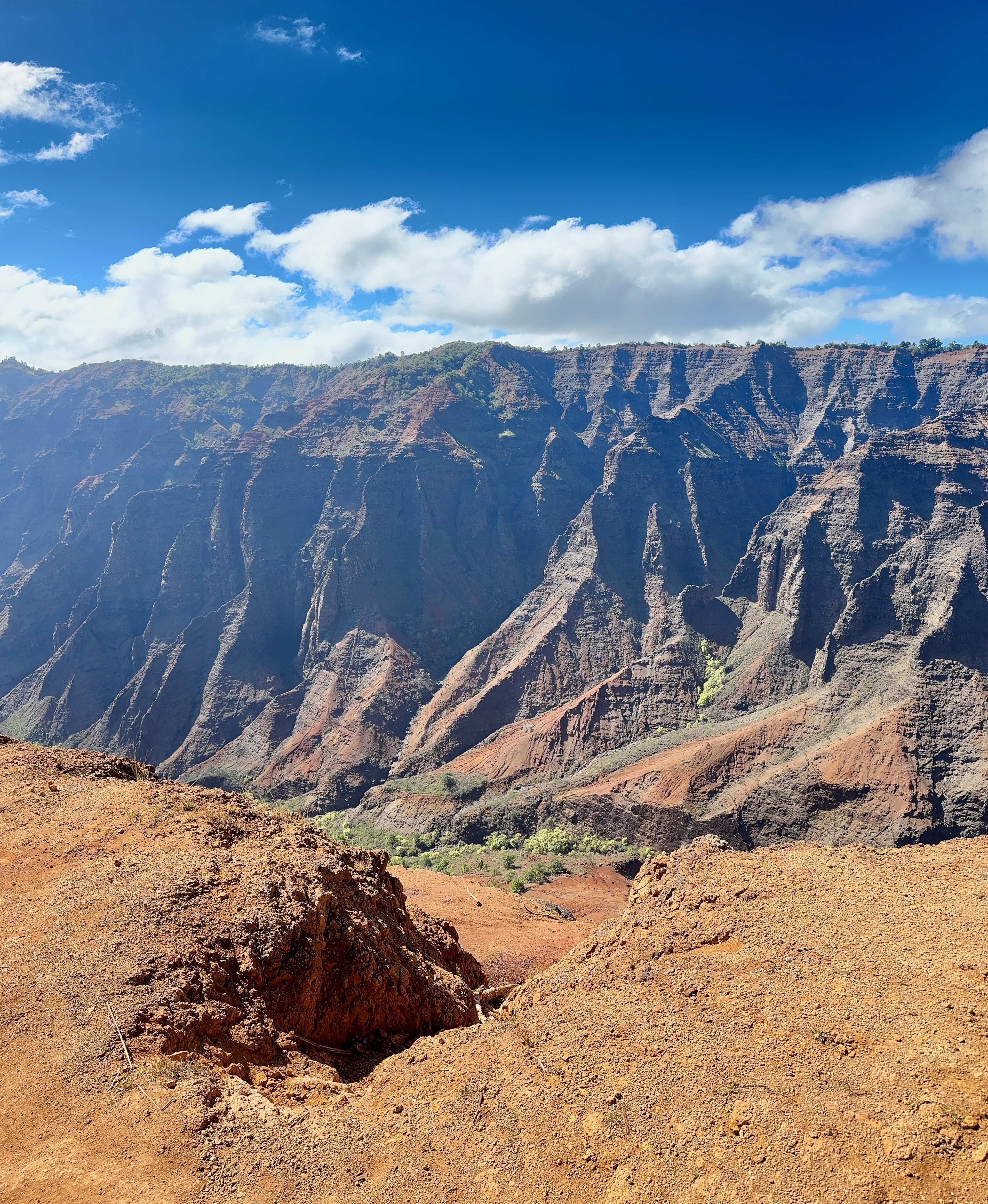
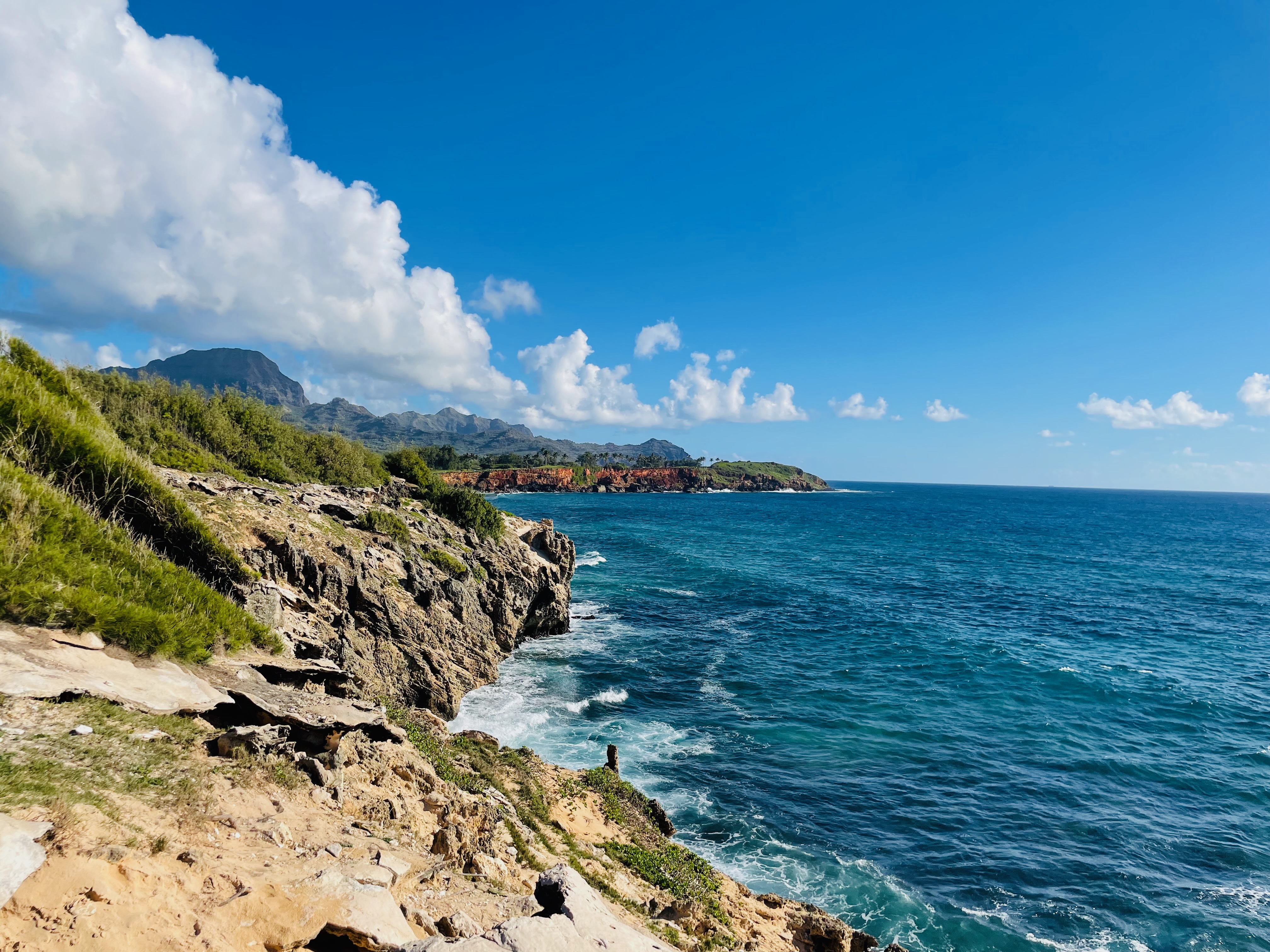
Kauai’s leeward side is on the south and west shores. Top destinations include Lihue, Poi’pu, Hanapepe, and Waimea, which sits at the base of the Waimea Canyon – a can’t miss site on Kauai.
Getting Around
Kauai may be the smallest of the four main Hawaiian islands, but don’t let that deceive you. To drive from the end of the road on the north shore to the end of the road on the west shore, plan to spend at least two hours in the car.
And if you’re wondering – Yes! You should definitely rent a car when staying on Kauai. If you choose to stay at a resort with amenities to enjoy and easy access to nearby beaches, you may opt to rent a car for only part of your stay. But our recommendation is that you rent a car because there is too much to see and do to stay in just one place.
 Kauai Vacation Blog
Leave a comment